Italian Food

Welcome to Italian Food where you can get any Italian recipes

March 31, 2012

6. Ravioli


Ravioli is a good idea for you to have delicious treat with you any time. Not just a treat or snack, it's also can be added in your soup or other dishes.
Ravioli are the smaller version of the tortelli. They are made with a filling of ricotta cheese and spinach. Ravioli can also be made with a savoury mince. Ravioli can be served with either pasta sauce and a sprinkling of Parmesan cheese or quite plainly with butter, a drizzle of olive oil and a sprinkle of Parmesan cheese.

Now lets see a snack from Italy that will make you in love in them..

Serves: 2


Ingredients for filling:
3/4 lb fresh spinach
2 oz ricotta cheese
ground nutmeg (pinch)
salt and pepper (to taste)


Method:

1. Boil spinach. Drain and dry.

2. Sieve spinach to a puree or chop very finely. Allow to cool.

3. Sieve cheese and mix in the spinach when cold.

4. Season well and add the ground nutmeg.

5. The mixture should be a firm puree.

Ingredients for pastry:
10 oz plain flour
2 tablespoons olive oil
1/2 teaspoon salt
2 eggs (beaten)
3-4 tablespoons milk

Extras:

Pasta making machine
Pastry board

Method:

1. Sift the flour with salt on to a board.

2. Make a well in the centre.

3. Put in the oil, eggs and half the milk.

4. Start mixing in the oil, eggs and milk gradually, drawing in the flour, add the rest of the milk as it is needed.

5. Continue to work up the paste until it is smooth and firm, knead well, then cover with a cloth and leave for 20-30 minutes to get rid of any elasticity.

6. Cut pastry into smallish pieces ready to be put through the pasta machine.

7. Put the now firm pastry through the pasta making machine, starting at No.1 and finishing at No.6.

Pasta machine for ravioli

8. Roll out one piece, paper thin. Slide to one side.

9. Roll out the second piece as thinly.

10. Lay out the pastry on a lightly floured board.

Ravioli pastry strips

11. Brush the second piece with water and spoon a little of the filling onto the pastry at regular intervals so that you end up with two rows of small egg sized mounds.

Ravioli mounds

12. Lift the first piece of pastry on top and with a small ball of the pastry press down the top piece around each mound of filling.

Ravioli covered

13. Cut out in squares with a pastry wheel.

Cutting ravioli

14. Repeat the above steps 7 -13 until you have finished using up all the pastry and filling.

15. Leave for 2-3 hours to dry a little, then cook.

Finished ravioli

Tips :

1. Simmer in stock or water for 15-20 minutes, drain and cover ravioli with a good tomato sauce; continuing to simmer gently until golden.

2. Serve the ravioli well dusted with grated Parmesan cheese for more tasty.

March 24, 2012

About the Italian Food


Actually, Italian food has different style of cooking. In many recipes of traditional food, Italian food has different ways to cook in different people, not like most food. It's unique I thought.
Now, let me explain about the unique of Italian traditional food.
What are the unique?


Many people knows most popular Italian food like spaghetti. People often that Italian cooking is all pretty much alike. However, those who travel through Italy notice differences in eating habits between cities, even those only a few miles apart. Not only does each region have its own style of Italian Food , but each community and each valley has a different way of Italian cooking as well.

Every town has a distinctive way of making sausage, special kinds of cheese and wine, and a local type of bread. If you ask people, even in the same area, how to make pasta sauce, they will all have different answers. Variations in the omnipresent pasta are another example of the multiplicity of Italian recipes: soft egg noodles in the north, hard-boiled spaghetti in the south, with every conceivable variation in size and shape.


 Perhaps no other country in the world has a cooking style so finely fragmented into different divisions. So why is Risotto typical of Milan, why did Tortellini originate in Bologna, and why is Pizza so popular in Naples? This is so for the same reason that Italy has only one unifying Italian language, yet hundreds of different spoken dialects.


Italy is a country of great variety, and Italian cooking is just another aspect of the diversity of Italian culture. This diversity in Italian food stems largely from peasant heritage and geographical differences. Italy is a peninsula separated from the rest of the continent by the highest chain of mountains in Europe. In addition, a long spine of mountains runs north to south down through this narrow country.

These geographic features create a myriad of environments with noticeable variations: fertile valleys, mountains covered with forests, cool foothills, naked rocks, Mediterranean coastlines, and arid plains. A great variety of different climates have also created innumerable unique geographical and historical areas.

But geographical fragmentation alone will not explain how the same country produced all of these: the rich, fat, baroque food of Bologna, based on butter, parmigiano, and meat; the light, tasty, spicy cooking of Naples, mainly based on olive oil, mozzarella, and seafood; the cuisine of Rome, rich in produce from the surrounding countryside; and the food of Sicily, full of North African influences.

The explanation is hidden in the past; the multitudes of food styles of Italy mainly result from its history. Divided for a long time into many duchies, princedoms, kingdoms, and states—often hostile to one another—political unification in Italy did not occur until 1861. Many populations in the past three thousand years have occupied Italian territory, and most of them contributed their own traditions.

Know signature of Italian food by its region


Italy is comprised of 20 regions, each known for its distinct culinary specialties.
With a population of almost 60 million and an area slightly larger than the state of Arizona, Italy is a diverse little nation boasting an equally diverse cuisine. The Italian food most Americans recognize — red-sauce specials like spaghetti with ragù — hails from the central region, but Italy's wide-ranging terrain and climate, long coastline, and neighboring countries have resulted in a delectable hodgepodge cuisine.
This boot-shaped country is comprised of 20 regions, each producing its own culinary treasures. Below, take a tantalizing peek inside the kitchen cultures of six well-known areas.


Lombardy
Capital city: Milan
Famous foods: risotto, osso bucco
In this northern Italian region just below Switzerland, rice and polenta are more popular than pasta, butter and lard beat out olive oil, and meat is eaten extensively. Dotted with picturesque lakes and hills, northern Italy is regarded as a paradise for cheese lovers, and Lombardy is the birthplace of such famous cheeses as firm Gran Padano, blue-veined Gorgonzola, soft, ripe Taleggio, tangy Provolone, and creamy Robiola.

Emilia-Romagna
Capital city: Bologna
Famous foods: Parmigiano Reggiano, tortellini, Bolognese sauce, balsamic vinegar of Modena
A vast, wealthy region located in northern Italy, Emilia-Romagna is rich in meats and super-eggy pasta. The craft of curing meat is held in high esteem here — Italy's best known meat product, prosciutto di Parma, is created in Emilia, as is the "king of cheeses," Parmigiano Reggiano.

Tuscany
Capital city: Florence
Famous foods: Pecorino cheese,
steak alla fiorentina, Chianti wine
The ancestral home of the wealthy and influential Medici family, Tuscany produces some of Italy's finest olive oils, sheep's milk cheeses, and meat dishes. Bread, baked in giant, salt-free loaves, is king in this region, and locals incorporate it into numerous salads and soups, including
ribollita (vegetable soup) and panzanella, a salad composed of crumbled bread, tomatoes, onions, and basil.

Lazio
Capital city: Rome
Famous foods: bruschetta, spaghetti alla carbonara, artichokes alla Roman
The region of Lazio, situated on the west coast of central Italy, is famous for fresh and dried pastas, superior artichokes and zucchini, and meltingly tender porchetta (whole roast pig). In this ancient region, you can nibble on artichokes cooked in garlic and herb oil before losing yourself in a plate of bucatini all amatriciana (hollow spaghetti with tomato, onions, and bacon) or spaghetti carbonara (a creamy pasta dish with egg, cheese, and black peppercorns).

Campania
Capital city: Naples
Famous foods: pizza, buffalo mozzarella, calzone, limoncello liqueur
Sunny Campania is characterized by its fertile volcanic soil, which affords lush produce like San Marzano tomatoes, eggplant, peppers, salad greens, figs, and lemons. The pizza we all know and love today is a descendant of the world's first pizzeria, which was born in Naples. When fresh mozzarella, sweet tomatoes, and a bread-loving culture combine, one delicious pie follows.

Sicily
Capital City: Palermo
Famous foods: caponata, veal Marsala
The largest island in the Mediterranean Sea, Sicily is located just off the "toe" of the boot that is mainland Italy. This region is home to Mount Etna and, therefore, rich volcanic soil, which produces an abundance of lemons, blood oranges, almonds, olives, and other fruit. Meat, including lamb, pork, veal, and rabbit, is common in central Sicily, where locals claim they invented the meatball, called polpetti. Pasta is usually topped with heady, spicy tomato sauce.


HTML Comment Box is loading comments...

March 09, 2012

5. Pizza


Pizza is the most famous Italian food that already spread around the world as one of the favorite food. Their recipes have known for generations and developed over and over. Even now, young and adult people like to spent their time to make pizza for their main courses or just a snack. Not left behind the fast food restaurants, they sometimes serve pizza with many tastes.

I love to eat them too, that is so tasty and not really difficult to make. Pizza can be added your favorite ingredients for the mixture, like mushrooms, sausages, hams, cheese, paprika, or corn. Not like others food, it can be mixed together as you want.

Now, let me explain the history of Pizza

The name Pizza originated from the area around Naples. It is not certain, however, that the nearby village of Pizza, where the flour for the best pizza dough is grown and ground, can claim to be its creator. A pizza may first have been made to use up left-over bread dough and tomato sauce plus whatever sausage, ham or cheese happened to be available.

Why not try it for yourself? Experiment with your favourite toppings!

Recipes :

The following quantity will be enough for four pizzas, each one serving 4-6 people.

Cooking Time: 30 - 45 minutes
Oven Setting: Preheat to 200C or Gas Mark 6
Ingredients for basic pizza dough:
1 lb flour
1 teaspoon salt
1 oz yeast
2 teaspoons sugar
1/4 pint of milk (warmed)
3 large eggs (beaten)
4 oz butter (creamed)

Method:
1. Sift the flour and salt into a warmed bowl.
2. Cream yeast and sugar and add to the warmed milk with the beaten eggs.
3. Add this liquid to the flour and beat thoroughly.
4. Work the creamed butter into the dough.
5. Cover and leave for 40 minutes to rise.
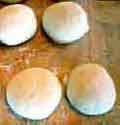
6. Divide the risen dough into four pieces.
Pizza dough
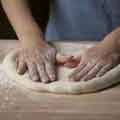
7. Flour the dough lightly and pat it out with the palm of your hand and lay over an ovenproof dish or flan ring. I prefer to use an ovenproof dish.
Basic pizza dough
8. You are now ready to add your ingredients.

Ingredients for the pizza:
2 lb button mushrooms (sliced)
3 large onions (chopped)
8 cloves garlic (sliced)
3 cans of plum tomatoes (chopped)
8 tablespoons of olive oil
8 oz Mozzarella cheese (sliced)
salt and pepper
seasoning ( pinch of oregano and basil)
anchovy fillets (optional)
pineapple chunks (optional
sausage (optional)
ham (optional)
sweetcorn (optional)

Method:
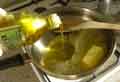
1. Fry the garlic in the olive oil until soft not browned. Keep warm.
2. Fry the onions until soft not browned. Keep warm.
3. Add more olive oil if necessary.
3. Fry the mushrooms until soft. Keep warm.
4. Set the oven at 200C or Gas Mark 6.
5. Cover the dough with the tomatoes.
6. Add the Mozzarella cheese slices.
7. Add the garlic.
8. Add the onions.
9. Add the mushrooms.
10. Add any other topping of your choice.
11. Add salt and pepper to taste.
12. Add seasoning.
13. Prove pizza for 10-15 minutes, then bake in the pre-set oven for 30-45 minutes.
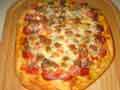
14. Once cooked, slide the pizza onto a wooden board for slicing.
Finished pizza

March 03, 2012

4. Spaghetti with Garlic


Spaghetti with garlic may not sound very appetizing to some but believe you me, it is very tasty indeed!
Not only will you taste the tomatoes, garlic, olive oil but also the seasoning. All of which combine to make spaghetti with garlic a mouth-watering dish. I have been making this Spaghetti with garlic pasta dish for my family for years and they still love it! The great thing about spaghetti is that you can always use it as the base for a quick meal. Italian food would not be the same without spaghetti.

Serves: 8

Ingredients for garlic sauce:
4 tablespoons of olive oil
3 garlic bulbs (thickly sliced)
2 oz butter
3 cans of plum tomatoes (chopped)
1 chicken stock cube
pinch of dried basil
pinch of dried parsley
salt and pepper (to taste)

Ingredients for the spaghetti:

1 pct (500 grams) spaghetti
1 large pot
1 tablespoon of salt
1/2 chicken stock cube
drizzle of olive oil (to taste)

Equipment:

1 large frying/saute pan

Method:

1. Heat olive oil and butter in the large frying pan.

Adding olive oil and butter

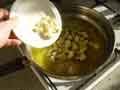
2. Add garlic (cook slowly until soft NOT browned)

Adding garlic

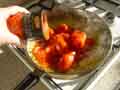
3. Add tomatoes.

Adding plum tomatoes

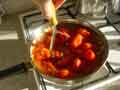
4. If not using already chopped tomatoes, crush the whole tomatoes using a potato masher.

Crushing tomatoes

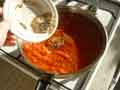
5. Crumble in the chicken stock cube.

Crumble stock cube

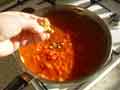
6. Add the dried basil and parsley.

Add seasoning

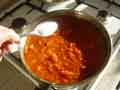
7. Add salt to taste.

Adding salt

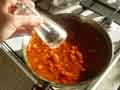
8. Add pepper.

Adding pepper

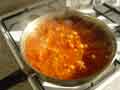
9. Bring the garlic sauce to the boil on a medium heat.

Simmering spaghetti sauce

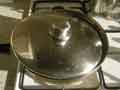
10. Partially cover and simmer for about 20 minutes on a low heat setting.

Partially covered pan

11. Whilst the sauce is cooking on a simmering heat, prepare the spaghetti.

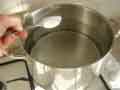
12. Bring a full pot of water to the boil.

13. Add the salt to taste.

Adding salt

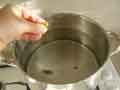
14. Crumble in the halved chicken stock cube.

Stock cube crumbled

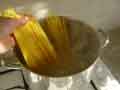
15. Cook the spaghetti according to the manufacture's instructions usually about 9 -11 minutes.

Spaghetti in pan

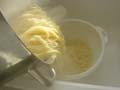
16. Drain the spaghetti.

Drain spaghetti

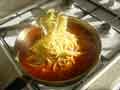
17. Add the spaghetti to the pan containing the garlic sauce.

Add spaghetti to sauce

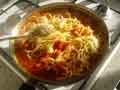
18. Mix well and continue to heat quickly for about 3 minutes.

Mix spaghetti

19. Drizzle some olive oil over the spaghetti.

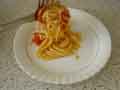
20. Spoon spaghetti and sauce onto a hot plate.

Spoon spaghetti onto hot plate

21. Serve immediately.

Spaghetti with garlic

Tips:

1. Spaghetti with garlic is best served "al dente" and piping hot.

2. This pasta dish does not require any Parmesan cheese.